8 Tips for Decorating Your Living Room in 2025 | Mokana
Discover the best living room design tips and transform your space. Visit our showroom in Enschede for unique tables and leather sofas. Personalized advice!
Your living room is the heart of your home, a place where comfort, style, and personality come together. However, decorating it can be a challenge. We offer 8 tips for decorating your living room in 2025! How do you create a space that is both functional and atmospheric, a place that truly feels like home? At Mokana Meubelen in Enschede, we understand this challenge like no other. With our years of experience and passion for unique furniture, such as our custom-made leather sofas and distinctive Suar tree trunk tables, we have compiled the ultimate guide. In our showroom in Enschede, you can see how these principles come to life.
In this comprehensive article, we share 8 essential tips for decorating your living room that will help you create a harmonious and impressive interior. We cover everything from choosing a central focal point and mastering layered lighting to creating functional zones and finding the perfect color balance. These practical insights are designed to help you instantly transform your living space, regardless of your interior design style.
We warmly invite our valued customers from the Netherlands and Germany to experience this inspiration and our unique collection in person at our 3,000 m² showroom in Enschede. For our German visitors: websites such as mokana.de often provide directions and opening hours to make your visit to our showroom just across the border as easy as possible. Let this guide be your starting point and discover how to create a living room that suits you perfectly by making the right choices. Let's get started.
1. Start with a Powerful Focus Point
Before you move a single piece of furniture, one of the most effective living room decorating tips is to determine a focal point. This is the visual anchor of the space, the element that immediately draws attention and around which the rest of your decor is built. Without a clear focal point, a room can quickly feel cluttered and disorganized. By consciously giving one element the leading role, you create calm, direction, and a sense of cohesion.
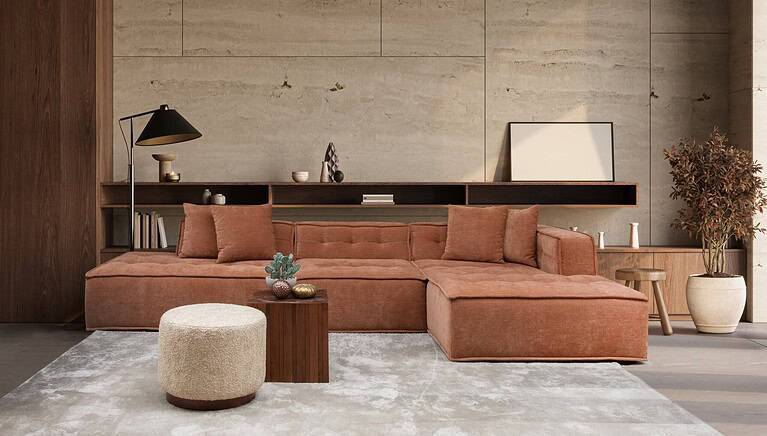
A powerful focal point can be an architectural element, such as a fireplace, but more often it is a dominant piece of furniture. Think, for example, of an imposing leather sofa, which not only offers comfort but also makes an unmistakable statement. Another excellent choice is a unique coffee table. A robust Suar tree trunk table from Mokana, for example, with its organic shapes and natural grain, immediately becomes the center of conversation and design.
How can you apply this effectively?
The key to success is to give this central element the space it deserves. The other furniture and accessories support the focal point rather than competing with it.
Choose one primary focal point: Avoid visual competition by giving only one element the leading role. Do you have a beautiful custom-made wall unit? Let that be the anchor and keep the rest of the interior more subdued.
Orient your furniture: Position your sofa and armchairs so that they are (partially) facing the focal point. This creates a natural, inviting seating area.
Use lighting to highlight: Use spotlights or a pendant light to literally put your focal point in the spotlight, especially in the evening.
Consider scale: Ensure that the size of your focal point is proportional to the dimensions of the living room. Furniture that is too large can overwhelm the space, while an element that is too small will lose its impact.
A well-chosen focal point is the foundation of your interior. It tells a story and sets the mood even before you notice the details.
At our showroom in Enschede, we are happy to help you find the perfect piece of furniture that can serve as a powerful focal point, from our unique tree trunk tables to impressive leather sofas.
2. Master the Art of Layered Lighting
A common mistake when decorating a living room is relying on a single, central light source. Real atmosphere and functionality are created by layered lighting. This is one of the most impactful living room design tips and involves combining different types of lighting at various heights. By using a mix of basic lighting, task lighting, and mood lighting, you can create depth and warmth and adjust the ambiance of the room at any time of day to suit the desired mood or activity.
8 Tips for decorating your living room in 2025 | Mokana 1
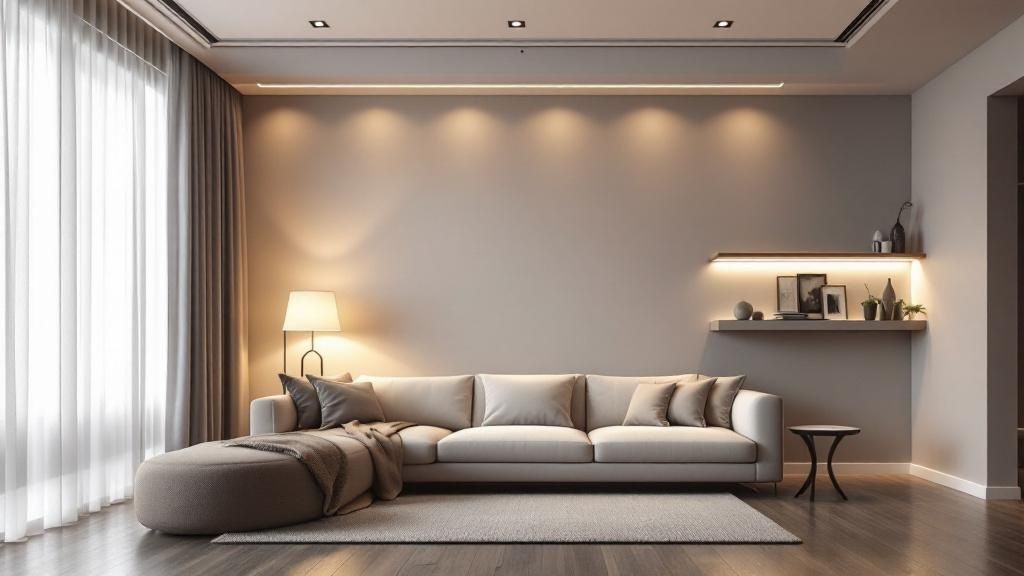
Layered lighting transforms a flat, uninteresting space into a dynamic and inviting whole. Think of the combination of a ceiling lamp for general lighting (basic lighting), a stylish floor lamp next to your favorite armchair for reading (task lighting), and subtle spotlights that highlight a work of art or a beautiful plant (accent lighting). A unique lamp, such as one with a special wooden lampshade, can itself become a decorative element that spreads warm, filtered light, perfect for the atmospheric layer in your lighting plan.
How can you apply this effectively?
The trick is to find a balance between the different layers of light so that they complement each other rather than dominate each other.
Start with the basics (basic lighting): Provide even, general lighting with ceiling lights or recessed spotlights. This is the functional base layer that illuminates the entire room.
Add task lighting: Place targeted lighting in areas where you perform specific tasks. Think of a reading lamp by the sofa or lighting above a workspace.
Create atmosphere with accent lighting: Use spotlights, wall lamps, or table lamps to highlight architectural details, art, or your most beautiful pieces of furniture. This adds depth and character.
Install dimmers: Dimmers are essential for layered lighting. They give you the control to adjust the intensity of each layer of light and effortlessly change the mood from bright and energetic to soft and intimate.
Choose the right color temperature: For living spaces, it is best to use lamps with a warm white color (around 2700K) to promote a cozy and homely atmosphere.
Good lighting does more than just illuminate a room; it shapes the space, influences your mood, and brings your interior to life.
At our showroom in Enschede, we are happy to advise you on how to create a layered lighting plan with the right lamps that perfectly matches your interior style and our unique furniture pieces.
3. Choose the Right Scale and Proportions
In addition to a focal point, respecting scale and proportion is one of the most fundamental living room design tips. These principles determine how furniture and decorations relate to the space and to each other. Selecting pieces with the right dimensions creates visual harmony and prevents a room from feeling too full and cramped or, conversely, empty and lost. A good balance in scale is the silent force behind an interior that radiates peace and equilibrium.
8 Tips for decorating your living room in 2025 | Mokana 2
The effect of proportion is immediately apparent. A generous, deep leather corner sofa looks perfect in a spacious living room, where it adds comfort and grandeur without obstructing the walking space. In a smaller room, on the other hand, a compact two-seater sofa with slender legs would create a feeling of airiness. The same applies to your coffee table; a table that is too small will disappear next to a large sofa, while a table that is too large will make the seating area impractical and unbalanced.
How can you apply this effectively?
The trick is to look not only at the physical dimensions, but also at the 'visual weight' of a piece of furniture. A dark, solid cabinet feels heavier than an open, light-colored one of the same size.
Measure your space: Before you start looking at furniture in our showroom in Enschede, it is essential to know the dimensions of your living room. This will prevent costly mispurchases.
Follow the 2/3 rule: A good rule of thumb is that your coffee table should be about two-thirds the length of your sofa. This creates a balanced visual ratio.
Keep walkways clear: Ensure at least 70-90 cm of free space for the main walkways to guarantee comfortable flow.
Play with height: In a room with high ceilings, you can choose taller cabinets or vertical artwork to emphasize the height. This draws the eye upward and makes the space appear larger.
Combine visual weight: Place a "heavy" piece of furniture, such as a sturdy leather sofa, opposite lighter elements, such as an armchair with high legs, to create balance.
Good proportions are like the invisible glue of your interior. They ensure that every element, from the sofa to the smallest accessory, falls into place and contributes to a cohesive whole.
At our showroom in Enschede, close to the German border, we are happy to advise you on the perfect scale for your furniture. We help you determine the ideal dimensions for your unique tree trunk table or custom-made leather sofa, so that they fit seamlessly into your living room.
4. Create Functional Zones
A modern living room is often more than just a place to watch TV. It is a multifunctional space where people live, work, relax, and play. One of the smartest living room design tips is therefore to create functional zones. This approach divides your living room into different, logical areas for specific activities. By defining zones, you bring structure and calm to the space, even when several things are happening at once.
8 Tips for decorating your living room in 2025 | Mokana 3
Consider, for example, a cozy reading corner, complete with a comfortable armchair and a good floor lamp. Or a special entertainment zone around the television, with a generous leather corner sofa that facilitates the perfect viewing experience. Other examples include a play area for the children, a compact workspace with a stylish desk, or a conversation corner with two chairs that invite good conversation. Each zone has its own purpose, making the living room as a whole more versatile and organized.
How can you apply this effectively?
Creating zones does not mean you have to build walls. You use furniture, rugs, and lighting to draw subtle, visual boundaries.
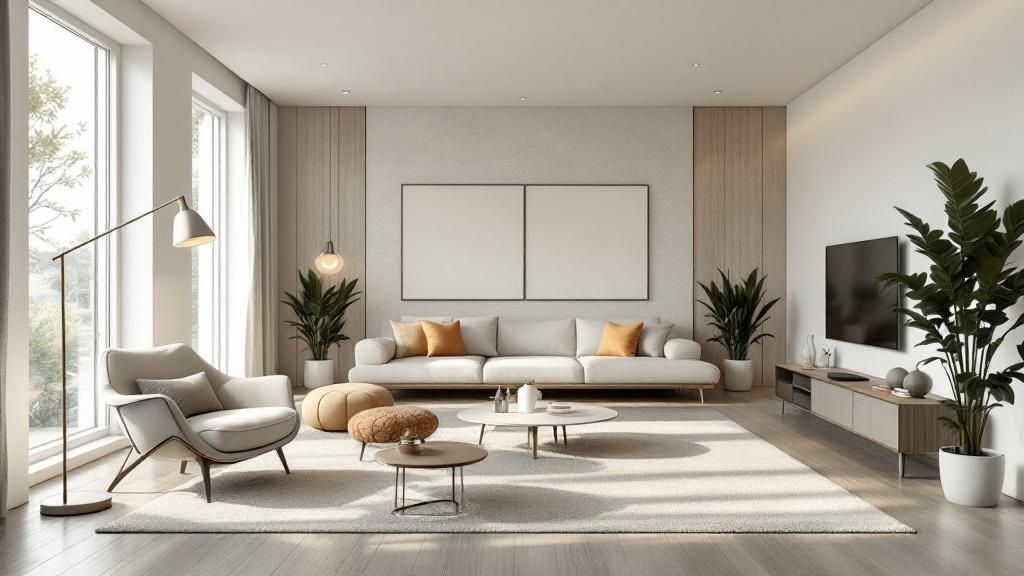
Use rugs as anchors: A rug is the easiest way to define a zone. Place a rug under your seating area to visually separate it from the rest of the room.
Position furniture strategically: The back of a sofa or an open cabinet can serve perfectly as a natural partition. This creates a sense of intimacy within a larger space.
Give each area its own lighting: A pendant lamp above the dining table, a reading lamp next to an armchair, and mood lighting in the TV corner enhance the function of each area and create the right atmosphere.
Consider the walking routes: Ensure that logical and unobstructed paths remain between the different zones. This prevents the space from feeling cramped or impractical.
Zoning transforms a single room into a versatile living environment that seamlessly matches the dynamics of your household.
In our showroom in Enschede, close to the German border, we would be happy to show you how you can create effective and stylish zones in your living room with strategically chosen furniture, such as a distinctive sofa or a room divider cabinet.
5. Add Texture and Pattern for More Depth
A living room consisting solely of smooth, plain surfaces can quickly feel flat and impersonal. One of the most impactful living room decorating tips is therefore to consciously add texture and pattern. This creates visual depth, tactile richness, and a layered effect that instantly gives a space a more luxurious and inviting feel. It is the art of combining different materials and surfaces, from rough to smooth and from matte to glossy, to create an engaging and dynamic atmosphere.
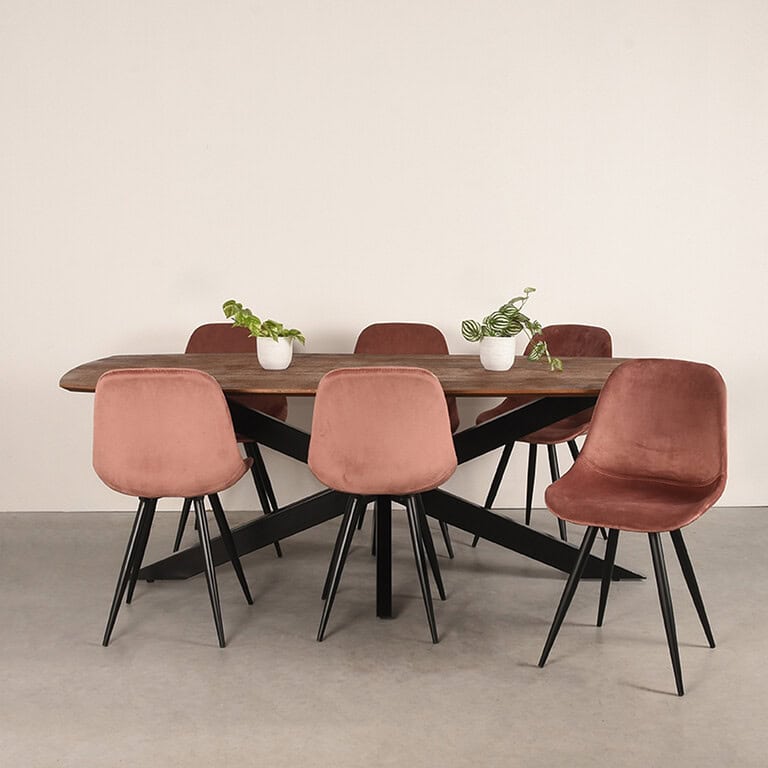
By embracing texture and pattern, you can add character without having to resort to bright colors. Think of the combination of a sleek, smooth leather sofa with a soft, chunky knit throw. Or a sturdy oak dining table that contrasts beautifully with the soft fabric of the dining room chairs. This mix of materials invites touch and makes the space feel lively and comfortable. Creating such a sensory experience is central to good interior design.
How can you apply this effectively?
The key is balance. You want to create an interesting mix without it becoming chaotic. By combining elements cleverly, the different elements reinforce each other.
Combine materials: Lay a soft wool rug on a wooden floor. Combine a smooth leather sofa with linen, velvet, or even faux fur cushions. Place metal accents next to a solid wood cabinet to enhance the contrast.
Vary in scale: If you use patterns, combine a large, bold pattern (such as on a rug) with smaller, more subtle patterns (such as on decorative pillows). This prevents visual competition.
Think in layers: Work with layers to create depth. A jute rug with a smaller, colored rug on top, or a stack of books and a ceramic vase on a wooden coffee table.
Integrate natural textures: Elements such as wood, stone, wool, and leather bring organic warmth into the home. A Suar tree trunk table is a perfect example of this; its unique grain and natural shape add unparalleled texture.
Texture is what brings an interior to life. It's the difference between a space that looks good in a photo and a space that feels really good when you're in it.
In our showroom in Enschede, we would love to let you experience the power of texture. Feel the softness of our leather sofas, see the rich structure of our unique wooden tables, and discover how the right combination of materials can transform your living room.
6. Integrate Smart Storage Solutions
A tidy living room exudes calm and space, but the reality is that we simply have stuff. The key to an organized interior is therefore not to eliminate possessions, but to integrate smart storage solutions. This is one of the most crucial living room design tips for a livable and stylish home. Effective storage combines functionality with aesthetics, so that remote controls, magazines, and toys lying around can be given a permanent place without detracting from the atmosphere.
Smart storage solutions often take the form of dual-purpose furniture. Consider an elegant ottoman that not only serves as a footrest or extra seat, but also has a hidden compartment for blankets and cushions. Another popular choice is a coffee table with integrated drawers or a bottom shelf, perfect for storing items you want to keep handy but out of sight. This leaves the surface of your beautiful table free for decoration and a cup of coffee.
How can you apply this effectively?
The trick is to seamlessly integrate storage space into your interior design so that it is practical without becoming dominant.
Opt for multifunctional furniture: Invest in a sideboard, TV stand, or large cabinet that offers both open compartments for decoration and closed doors for clutter.
Utilize vertical space: Add height with wall shelves or a sleek, tall cabinet. This draws the eye upward and leaves the floor free, creating a more spacious feel.
Work with stylish accessories: Use decorative boxes and baskets for smaller items. A stylish storage box such as Jelia by Mokana can add a colorful accent while also being functional.
Accessibility plan: Keep frequently used items in an easily accessible place. Items you need less often can be stored higher up or deeper inside cupboards.
A well-designed storage system is both invisible and indispensable. It supports the tranquility of your design and makes everyday life easier.
At our showroom in Enschede, we are happy to help you find furniture that is not only beautiful, but also offers smart storage solutions that suit your unique living style.
7. Create Color Harmony and Balance
Color is one of the most powerful tools in the interior design arsenal. It not only influences the atmosphere and emotional value of your living room, but also the perception of space and light. One of the most valuable tips for decorating your living room is therefore to create a well-thought-out and harmonious color palette. This goes beyond simply painting your favorite color on the wall; it is the art of combining shades in a way that brings calm, cohesion, and visual interest.
A proven method for achieving this is the 60-30-10 rule. This guideline helps you distribute colors in a balanced way: 60% of your space is dominated by a primary color (usually walls and large pieces of furniture), 30% by a secondary color (e.g., curtains, smaller furniture, or a rug), and 10% by an accent color (cushions, art, and accessories). This principle prevents a chaotic overall effect and ensures a professional and cohesive result.
How can you apply this effectively?
The key is to start with a base and add layers of color from there. Neutral tones often form a safe and timeless base, which you can then enrich with deeper or more vibrant colors.
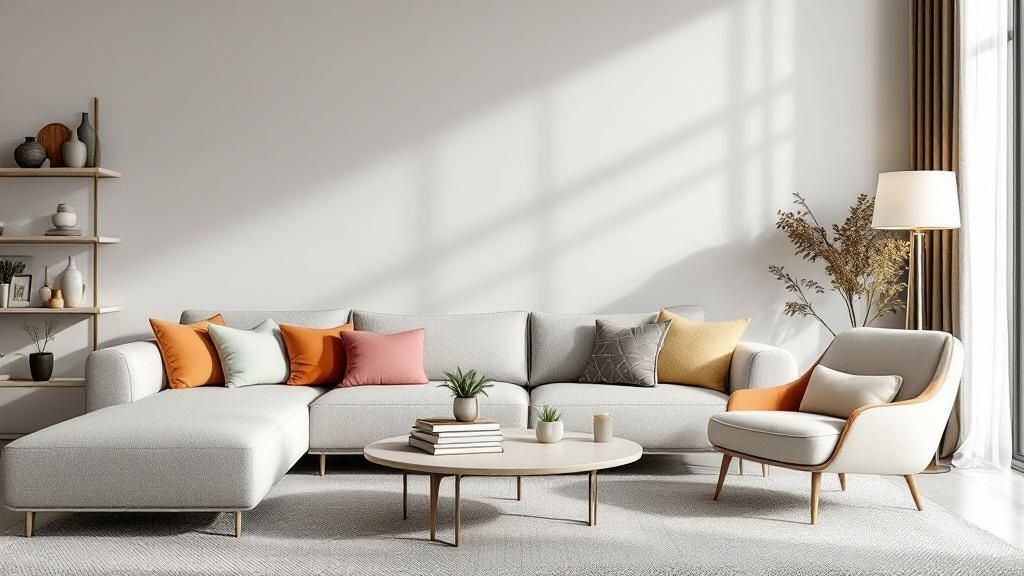
The 60-30-10 Rule as a guideline: Distribute your colors. For example, choose a soft gray shade (60%), combine it with the deep cognac of a leather corner sofa (30%), and add gold or dark green accents (10%) in accessories.
Start with a neutral foundation: Walls in white, beige, or gray tones provide a versatile canvas. From there, you can introduce color through furniture and decor, making it easier to make changes in the future.
Test colors in your own light: Paint colors can look completely different in the store than they do at home. Test samples on different walls and observe them throughout the day in both natural and artificial light.
Use color to accentuate: Do you have a beautiful alcove or architectural detail? Give it an accent color to draw attention to it and create depth.
Color is not merely decoration; it is a form of communication. A balanced palette tells a story of tranquility and cohesion, making your living room feel like a thoughtful and personal sanctuary.
At our showroom in Enschede, we are happy to advise you on how to integrate the rich, natural colors of our unique furniture pieces, such as a tree trunk table or a leather sofa, into a harmonious color palette for your living room.
8. Bring Nature Inside
One of the most impactful living room decorating tips is to create a connection with the outside world. By integrating natural elements, you not only bring beauty into your home, but you also promote a sense of calm and well-being. This approach, also known as biophilic design, uses plants, organic materials, and shapes to create a healthier, calmer, and visually appealing living environment. It is a proven way to reduce stress and create a serene atmosphere.
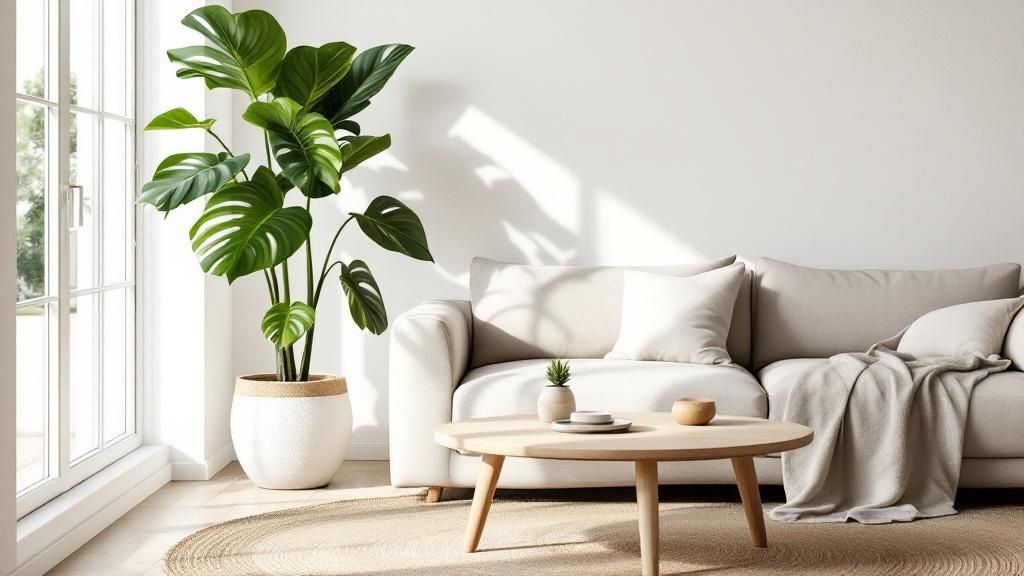
The power of nature in your interior lies in the details and the larger gestures. A large fiddle leaf plant in a sunny corner can be a living work of art, while a collection of succulents on a shelf adds a subtle touch of green. The most fundamental way to apply this principle is through your furniture. Consider a unique tree trunk coffee table from Mokana, where the organic 'live-edge' edges and the natural grain of the wood bring a direct, tangible piece of nature into your sitting area. This type of furniture forms a perfect basis for a natural interior.
How can you apply this effectively?
The key is balance. You don't have to transform your living room into a complete jungle, but you can make a big difference with strategic choices.
Choose the right plants: Consider the amount of light in your living room. Are you new to plants? Then start with easy-care varieties such as Sansevieria or Zamioculcas.
Group for impact: Place plants in odd numbers and at different heights together. This creates a dynamic and visually interesting green corner.
Embrace natural materials: Combine your green plants with furniture and accessories made of wood, leather, wool, or linen. A sturdy leather sofa, for example, creates a beautiful contrast with the softness of plants and textiles.
Maximize daylight: Use light, translucent window coverings to let in as much natural light as possible. This is not only good for your plants, but also for your own state of mind.
By bringing nature indoors, you create a living environment that is not only beautiful, but also nourishing for the soul. It is an investment in peace and harmony.
In our showroom in Enschede, you can experience for yourself the unique look and feel of our tree trunk tables and other furniture made from natural materials. We are happy to help you create an interior in which you can completely unwind.
8 Living Room Decorating Tips Comparison
Aspect
Create Focus Point ⭐🔄⚡📊💡
Layered Lighting ⭐🔄⚡📊💡
Correct Proportions ⭐🔄⚡📊💡
Functional Zones ⭐🔄⚡📊💡
Texture and Pattern ⭐🔄⚡📊💡
Smart Storage Solutions ⭐🔄⚡📊💡
Color Harmony and Balance ⭐🔄⚡📊💡
Bringing Nature Indoors ⭐🔄⚡📊💡
Implementation complexity 🔄
Low – choose one dominant element
High – plan multiple light sources
Medium – accurate measurement and planning
Medium – careful layout and furniture
Medium – choice of materials and combinations
Medium – integrating furniture with storage
Low – select and apply color palette
Low-medium – choosing plants and materials
Required resources ⚡
Low – one central object
High – multiple lamps and installations
Medium – suitable custom-made or matching furniture
Medium – various furniture and partitions
Low-medium – various fabrics and materials
Medium – multifunctional and organized furniture
Low – paint, accessories
Low – plants, natural materials
Expected results 📊
Visual focus and harmony
Flexible, atmospheric lighting
Balanced, functional space
Organized, multifunctional layout
Visual depth and warmth
Tidy, functional, and aesthetically pleasing
Cohesive, harmonious appearance
Calming, natural atmosphere
Ideal usage scenarios 💡
Spaces requiring clear focus
Spaces where atmosphere and function change
Spaces with various furniture and functions
Large or multifunctional living room
Living rooms that need more texture and depth
Living rooms in need of extra storage space
Spaces that benefit from color control
Spaces that benefit from natural elements
Key benefits ⭐
Arrange furniture easily, create tranquility
Atmosphere-enhancing, multifunctional light
Visual balance, improved spatial flow
Space used efficiently, structured design
Enhances the atmosphere, adaptable to the season
Clutter-free, dual functionality
Unified look, psychological impact of color
Improves well-being and connection with nature
Bring your living room to life with Mokana in Enschede
Designing your living room is a creative journey, a process in which you transform a space into a home that reflects your personality and lifestyle. The "living room decorating tips" we've discussed in this article are the building blocks for this process. From strategically choosing a focal point, such as a unique tree trunk table, to creating an inviting atmosphere with layered lighting, each element plays a crucial role in the final result. You now have the knowledge to create a cohesive and functional interior.
However, the key to successful interior design lies not only in theory. It is about the synergy between a good plan and the selection of high-quality, characterful furniture. The right proportions and scale of your furniture determine the flow of the space, while the thoughtful creation of functional zones ensures that your living room is both practical and cozy. These concepts really come to life when you apply them with furniture that truly appeals to you.
From Theory to Tangible Results
Understanding color harmony and the importance of adding texture and patterns is essential. Think of the rich, warm feeling of a premium leather sofa combined with soft cushions and a coarse woven throw. Or the way natural light plays with the unique grain and knots of a solid wood table. These are the details that give an interior depth and character.
The best way to appreciate these elements is to experience them for yourself. The 'living room design tips' serve as your guide, but true inspiration comes from seeing and feeling the materials. It is the irreplaceable experience of sitting on a sofa, feeling the robust quality of a tabletop, and seeing how light brings the colors and textures in our Enschede showroom to life.
Finding Your Personal Style in Enschede
We understand that every living room is unique, just like the wishes of every customer. That is why we cordially invite you, our valued customers from all over the Netherlands and our neighbors from Germany (unsere deutschen Nachbarn sind herzlich willkommen!), to visit our 3,000 m² showroom in Enschede. Here you can see the theory from this article put into practice. Discover how a custom-made leather sofa can become the centerpiece of your sitting area or how our unique tree trunk tables bring a piece of nature into your home.
Our expert team is ready to provide you with personalized interior design advice. We are happy to help you translate the 'living room design tips' to your specific situation. Whether you need help choosing the right dimensions, combining colors, or finding the perfect accessories, at Mokana in Enschede, you will find everything under one roof. Your dream living room is within reach, and the journey to get there begins with the right inspiration and the best furniture.
Ready to put these living room decorating tips into practice and take your interior design to the next level? Discover Mokana Furniture's extensive collection, where craftsmanship, unique design, and personal service come together. Visit our website for inspiration or stop by our showroom in Enschede to experience the quality for yourself.
Chamber of Commerce no.: 71451439 VAT no.: NL858720681B01 BIC: ABNANL2A
Store opening hours:
Hello
Opening hours
Monday
1:00 p.m. to 6:00 p.m.
Tuesday
10:00 a.m. to 6:00 p.m.
Wednesday
10:00 a.m. to 6:00 p.m.
Thursday
10:00 a.m. to 6:00 p.m.
Friday
10:00 a.m. to 6:00 p.m.
Saturday
10:00 a.m. to 5:00 p.m.
Sunday
Closed (except for the first Sunday)
Additional opening hours and Sunday shopping
Sunday, April 5 Shopping Sunday open from 12:00 p.m. to 5:00 p.m.
Our customer service is available by phone Monday through Friday from 10:00 a.m. to 5:00 p.m.
Due to high traffic in the store on Saturdays, we may have limited availability by phone. Please send us an email and we will call you back as soon as possible.